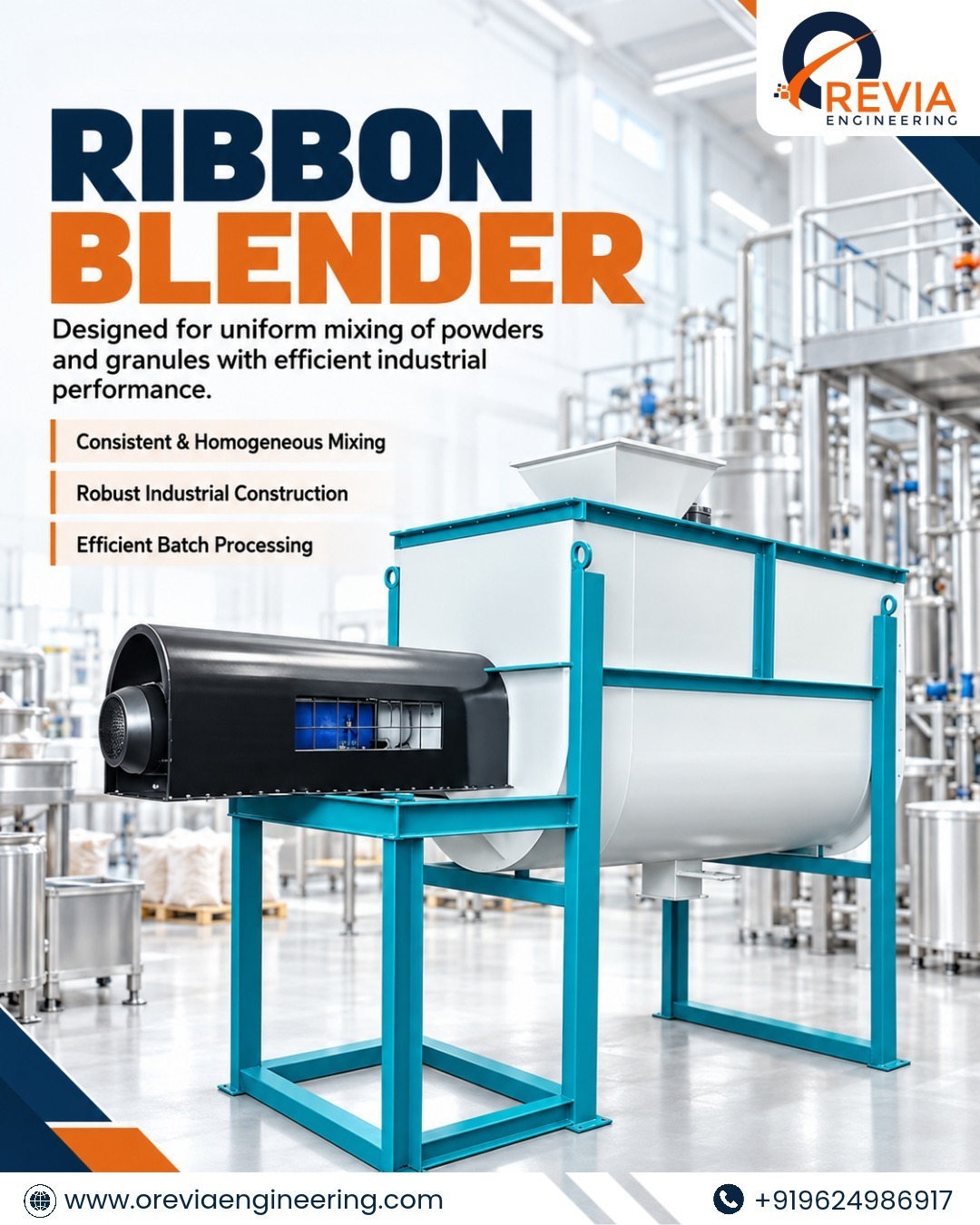
Ribbon Blender: How Does It Improve Powder-Mixing Efficiency
Industries that process powders and granules need reliable equipment to achieve consistent mixing results. Evenly combining ingredients can be challenging, especially with large batches or materials with different properties. A ribbon blender streamlines this process through mechanical mixing, supporting uniform material distribution and efficient batch production.
Orevia Engineering Pvt. Ltd. serves as a point of contact for businesses exploring industrial mixing equipment. Understanding how a ribbon blender works, its benefits, applications, and selection criteria can help manufacturers choose machinery that matches their production requirements.
What Is a Ribbon Blender
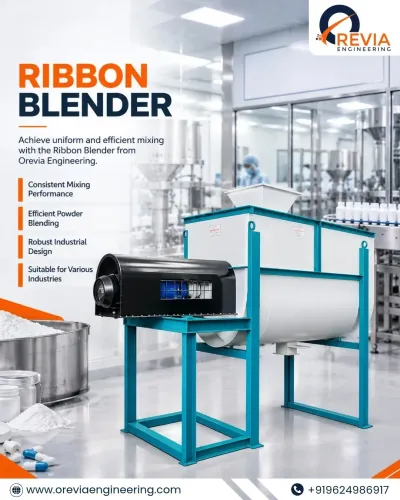
A Ribbon Blender Machine is industrial equipment commonly used to mix dry powders and granules. It typically features a horizontal U-shaped mixing trough, a central rotating shaft, and ribbon-shaped blades. As the shaft rotates, the ribbons move materials in different directions, helping distribute ingredients throughout the mixing chamber.
This mixing action helps produce a more uniform blend. Depending on the machine's design and material compatibility, a ribbon blender can support different batch-processing applications across manufacturing industries.
Businesses searching for a Ribbon Blender in Ahmedabad can evaluate capacity, construction materials, and mixing performance to find a solution that fits their operations.
How Does a Ribbon Blender Improve Powder Mixing Efficiency
A ribbon blender can support industrial production by improving the organization and consistency of mixing operations.
1. Promotes Uniform Mixing
Consistent ingredient distribution helps maintain product quality. The rotating ribbon blades move powders and granules through the mixing chamber, helping combine the materials throughout the batch. The final mixing quality depends on material properties, loading levels, mixing time, and machine design.
2. Supports Efficient Batch Processing
A Ribbon Blender Machine processes a defined quantity of material during each batch. This helps manufacturers plan production schedules, manage ingredient quantities, and follow repeatable mixing procedures.
3. Handles Different Powders and Granules
Ribbon blenders can handle many types of dry materials. However, suitability depends on particle size, density, moisture content, flow behavior, and other material characteristics. Evaluating these factors before selecting equipment helps ensure the machine matches the intended application.
4. Provides Durable Industrial Operation
Industrial mixing equipment must withstand regular production demands. A properly selected ribbon blender can support routine manufacturing operations when its construction, capacity, and materials suit the application.
5. Helps Reduce Manual Mixing Tasks
Mechanical mixing reduces the need for manual blending in suitable processes. With appropriate operating procedures, a ribbon blender can help manufacturers manage recurring production tasks and organize their workflows more effectively.
What Are the Common Applications of a Ribbon Blender
A Ribbon Blender for Powder Mixing can be used across industries, depending on the materials processed and the equipment configuration.
* Food Processing: Blending suitable dry ingredients, seasoning mixes, and powdered food components.
* Pharmaceutical Manufacturing: Mixing compatible dry ingredients under appropriate process controls.
* Chemical Processing: Combining selected chemical powders and granules.
* Agriculture: Mixing suitable fertilizer components and other granular materials.
* Industrial Manufacturing: Blending dry raw materials used in different production processes.
Before purchasing equipment, manufacturers should confirm material compatibility, cleaning requirements, required mixing uniformity, and applicable industry standards.
What Factors Should You Consider When Choosing a Ribbon Blender Machine
Choosing suitable mixing equipment requires understanding your production volume, material characteristics, and operational needs.
Mixing Capacity
Evaluate the required batch size and the machine's recommended working capacity. The selected blender should accommodate your production needs without exceeding its operating limits.
Material Properties
Consider particle size, bulk density, flow characteristics, moisture content, and abrasiveness. These properties can influence mixing performance and equipment selection.
Mixing Uniformity and Time
Determine the level of consistency your product requires. Ask the supplier about suitable mixing conditions and whether material testing or mixing trials are available.
Construction Materials
Choose a machine construction that suits the materials you process and your application's hygiene, corrosion resistance, or durability requirements.
Cleaning and Maintenance
Check whether you can easily access and clean the mixing chamber. Also consider maintenance requirements, spare-part availability, and technical support.
Safety Features
Review equipment guarding, emergency stops, loading and unloading arrangements, and dust-control requirements where applicable. Safety provisions should match the materials and working environment.
How to Choose a Ribbon Blender in Gujarat
When comparing a Ribbon Blender in Gujarat, assess the machine's technical specifications and suitability for your manufacturing process rather than focusing only on its purchase price.
Consider the following points before making a decision:
* Available batch capacities and machine configurations.
* Compatibility with the powders and granules you process.
* Mixing performance and required batch consistency.
* Construction material and cleaning arrangements.
* Installation, maintenance, and technical support.
* Quotation details, delivery arrangements, and warranty terms.
Discussing these requirements with a machinery supplier can help you identify an appropriate mixing solution for your facility.
Finding a Ribbon Blender in India
Businesses searching for a Ribbon Blender in India should compare equipment specifications, supplier support, and suitability for their production requirements.
Before placing an order, request information about working capacity, machine dimensions, motor specifications, construction materials, and available safety features. Confirm the delivery arrangements, installation requirements, warranty, and after-sales services directly with the supplier.
A careful evaluation can help manufacturers select equipment that supports their production objectives and long-term operating needs.
Why Consider Orevia Engineering Pvt. Ltd. for Industrial Mixing Equipment
Selecting industrial machinery involves evaluating equipment design, operating capacity, material compatibility, and technical support. Contact Orevia Engineering Pvt. Ltd. to learn more about its industrial equipment and mixing solutions.
When discussing a Ribbon Blender Machine, explain your material type, expected batch size, required mixing consistency, and production conditions. These details can help clarify which machine specifications may suit your application.
Contact the company directly to confirm product availability, pricing, installation arrangements, warranty coverage, and after-sales support before making a purchase decision.
A Ribbon Blender helps manufacturers mix powders and granules through controlled mechanical action. Its ribbon-based design supports ingredient distribution, while batch processing helps organize production and maintain repeatable mixing procedures.
Choosing suitable equipment requires careful consideration of batch capacity, material properties, mixing uniformity, construction materials, and maintenance needs. Whether you are looking for a Ribbon Blender in Ahmedabad, a Ribbon Blender in Gujarat, or a Ribbon Blender in India, compare the machine's capabilities with your production requirements before investing.
Looking for a suitable powder-mixing solution? Contact Orevia Engineering Pvt. Ltd. to discuss your application and enquire about available ribbon blender options.
Frequently Asked Questions (FAQs)
1. What is a ribbon blender used for?
A ribbon blender mixes dry powders and granules in industrial applications. Common uses include blending suitable food ingredients, chemical powders, fertilizer components, and other dry materials.
2. How does a ribbon blender work?
A motor rotates a central shaft fitted with ribbon-shaped blades. These blades move materials through the mixing chamber in different directions, helping distribute the ingredients throughout the batch.
3. What materials can a ribbon blender mix?
A ribbon blender can process many types of dry powders and granules. Suitability depends on particle size, density, flow behavior, moisture content, abrasiveness, and other material characteristics.
Keywords