
Introduction: One Layout Choice, Many Downstream Effects
If you are planning a new plant, expanding a production line, or replacing an aging vessel, one of the first questions is simple: should the tank stand upright or lie on its side?
It sounds minor, but it is not. Tank orientation changes your foundation design, pipe routing, pump suction, level measurement, cleaning method, and even how the tank is brought to site. If you choose wrong, you pay for it in rework or daily operating inconvenience that lasts for years.
At Orevia Engineering Pvt. Ltd., we design and build industrial tanks for chemical, pharmaceutical, food, paint, resin and allied industries. As an Agitator Tank Manufacturer in India based in Pune, we are regularly asked this exact question. In this guide, you will learn:
- How vertical and horizontal tanks differ in construction
- How they compare on space, capacity, drainage, pressure, and measurement
- Why agitator tanks are almost always vertical
- How to match the design to your process
- What to check when choosing a manufacturer
The Short Answer
Choose a vertical tank when floor space is tight, volume is large, you need complete drainage, or the liquid must be mixed with an agitator. Choose a horizontal tank when headroom is limited, the liquid is stored under some pressure, the tank must be buried or skid-mounted, or you need a low, easy-to-reach buffer tank near process equipment.
Many plants use both: large vertical tanks for bulk storage and mixing, and smaller horizontal tanks as day tanks near the point of use.
 |  |
 |  |
What Is a Vertical Tank?
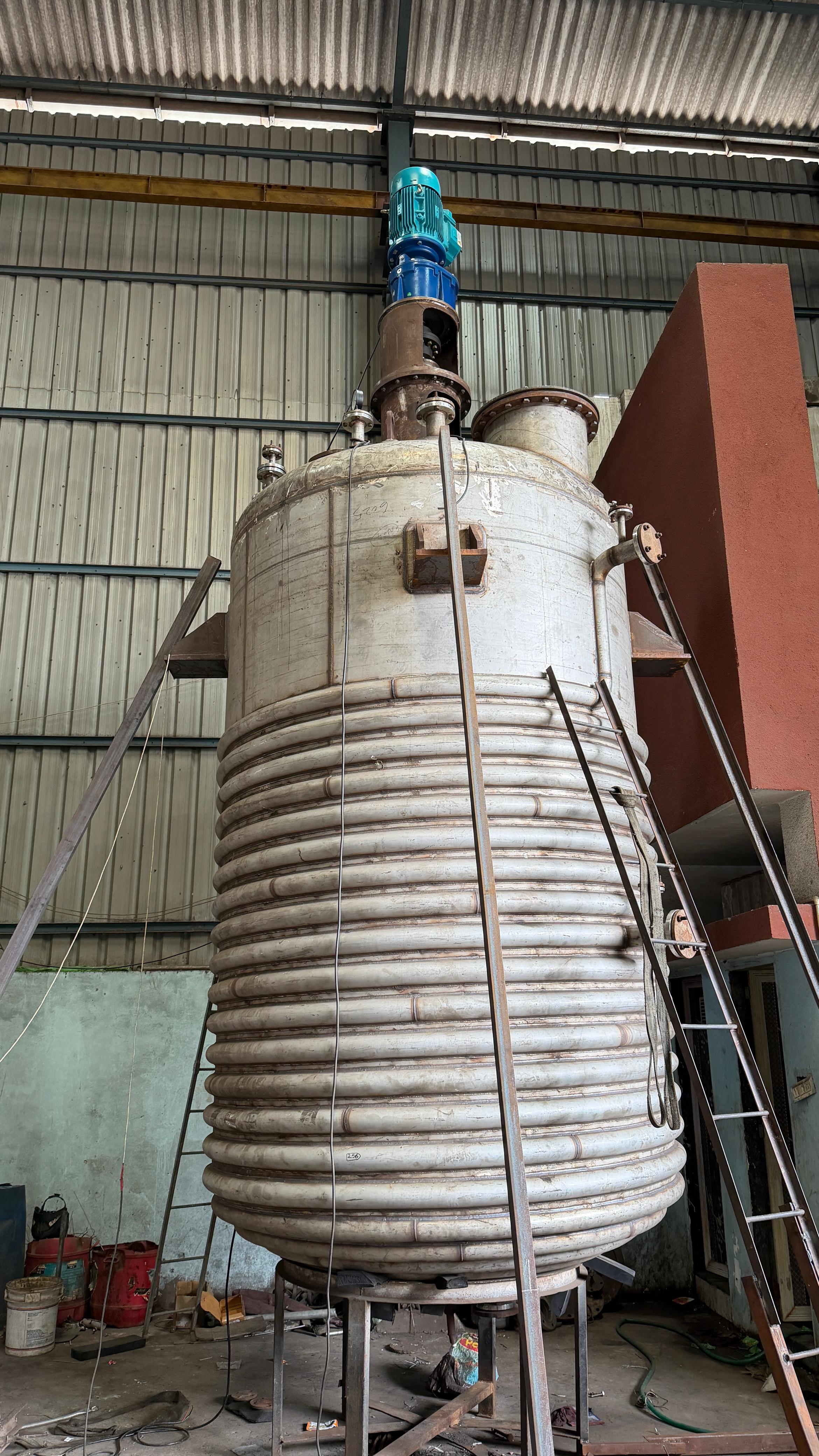
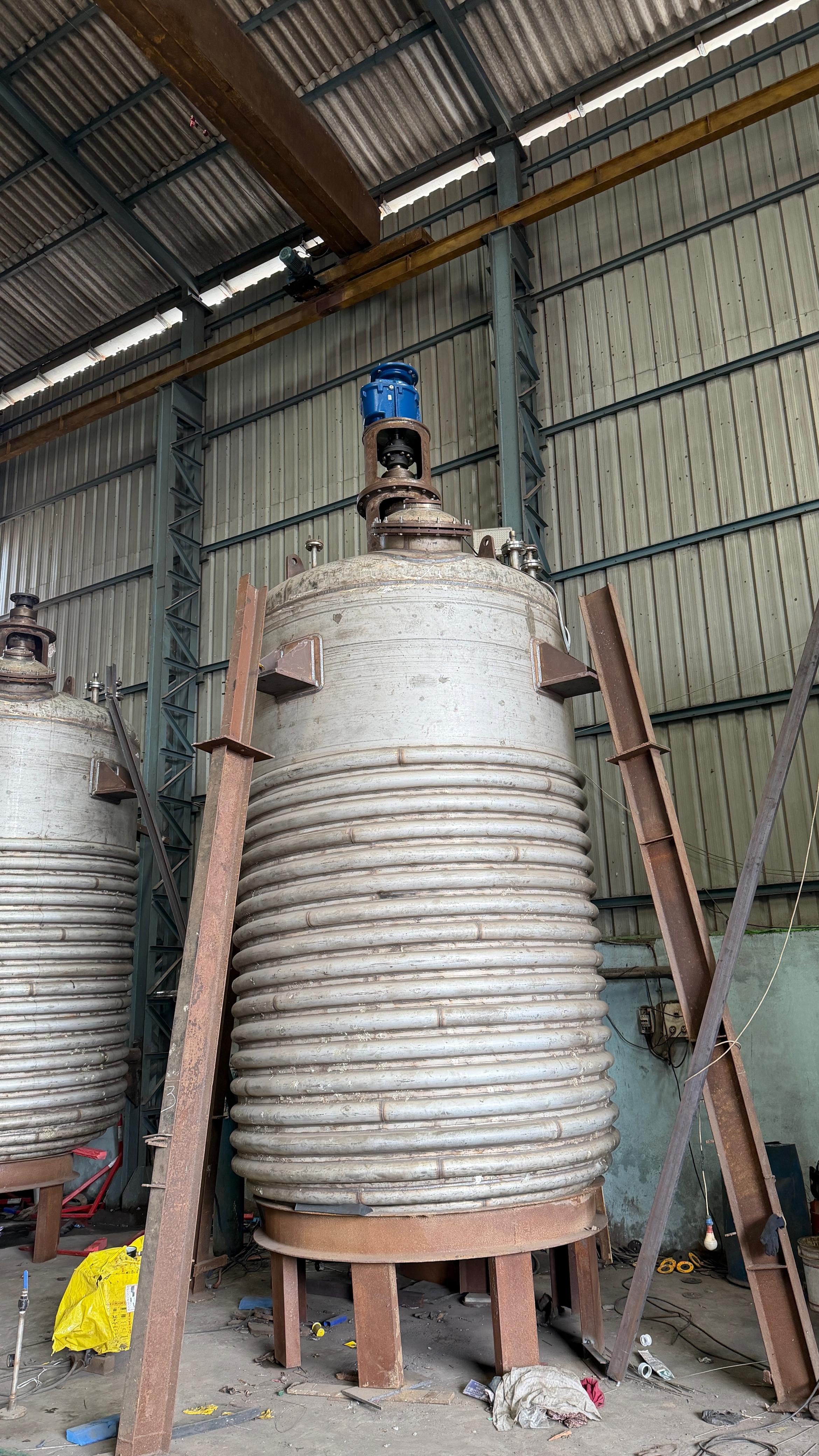
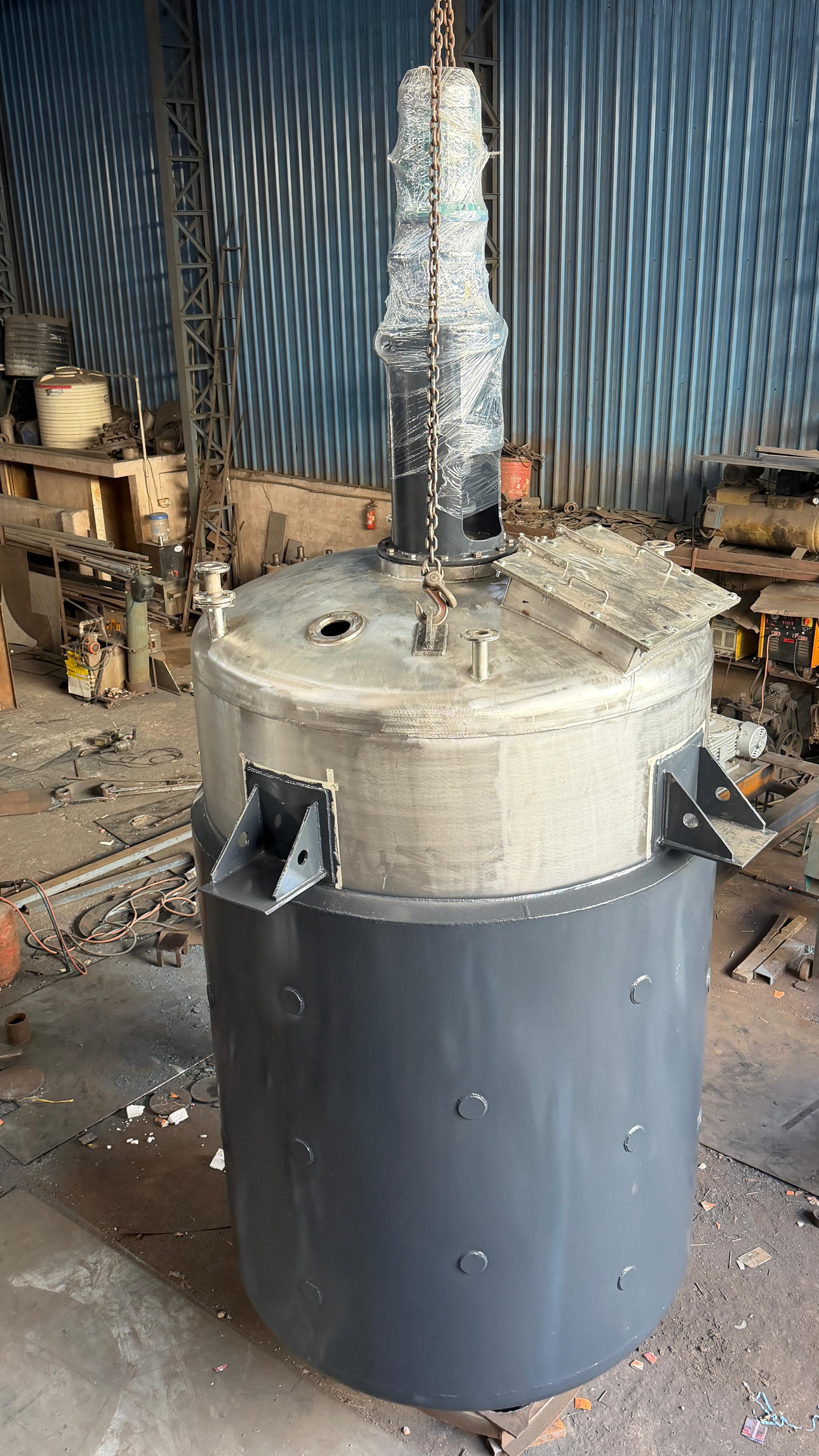
A vertical tank is a cylinder standing upright on its base. It may sit on a flat foundation, on legs, or on a skirt. Depending on the duty, the bottom may be flat, conical, or dished, and the top may be open, flat, domed, or closed with a manway.
Key features
- Uses height instead of floor area, so the footprint is small
- A conical or dished bottom drains to a single low point
- The roof offers a natural mounting position for an agitator drive.
- Round footprint makes it easy to group tanks in a common dyke
- Can scale from a few hundred liters to very large capacities
This is the standard layout for a Mixing Tank With Agitator, because the shaft hangs straight down from the center of the lid and the impeller works evenly through the whole batch.
What Is a Horizontal Tank?
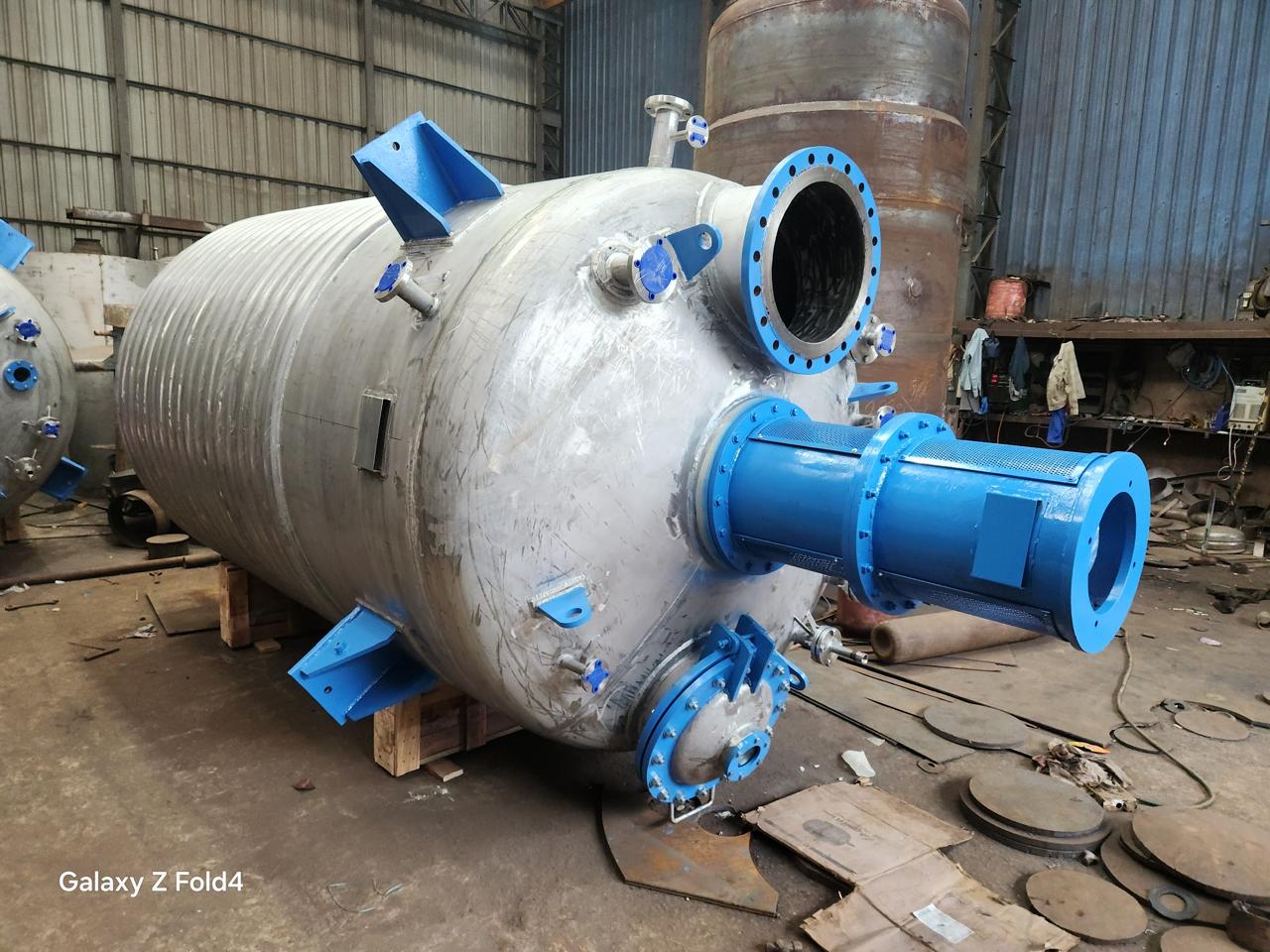
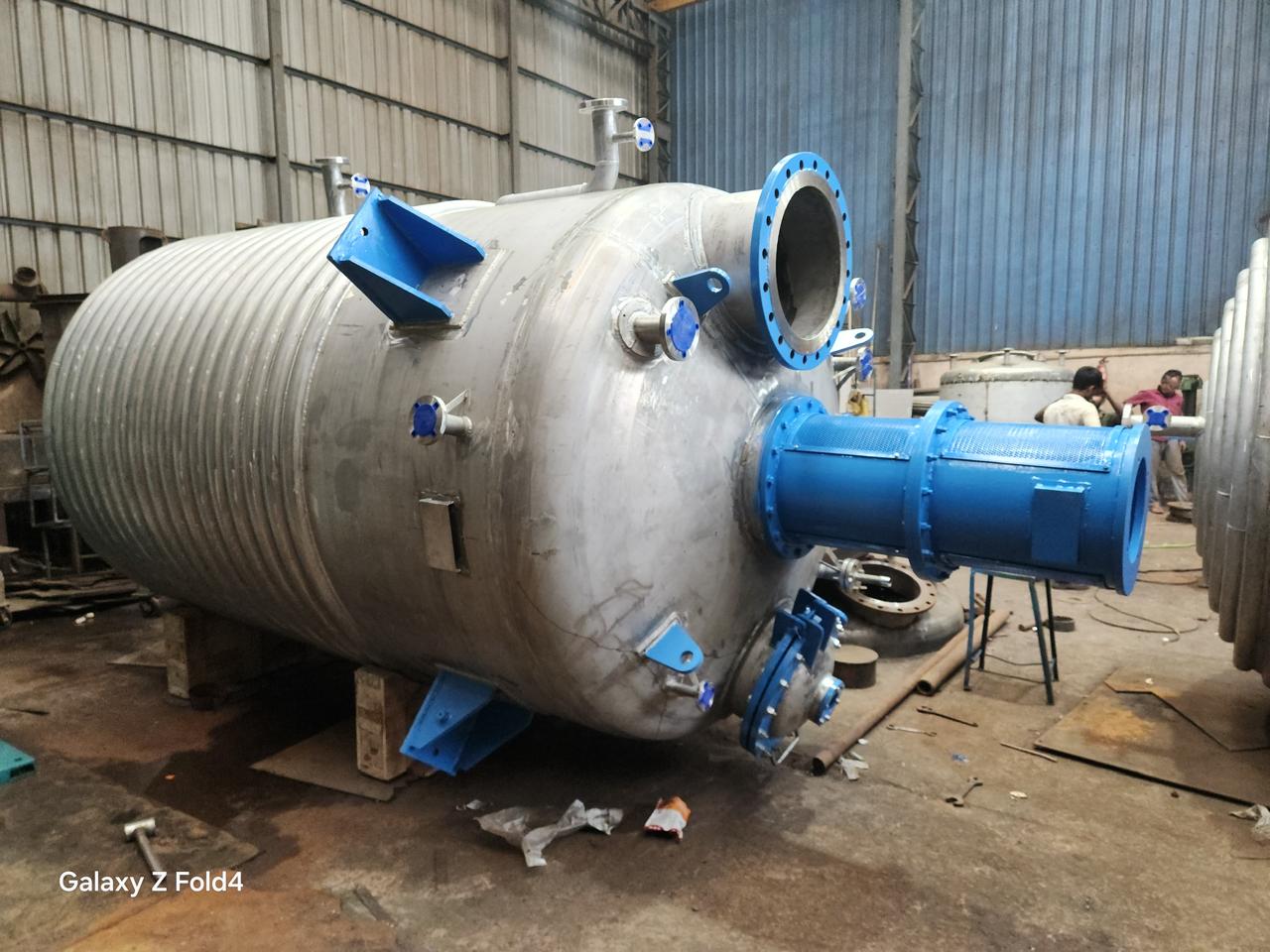
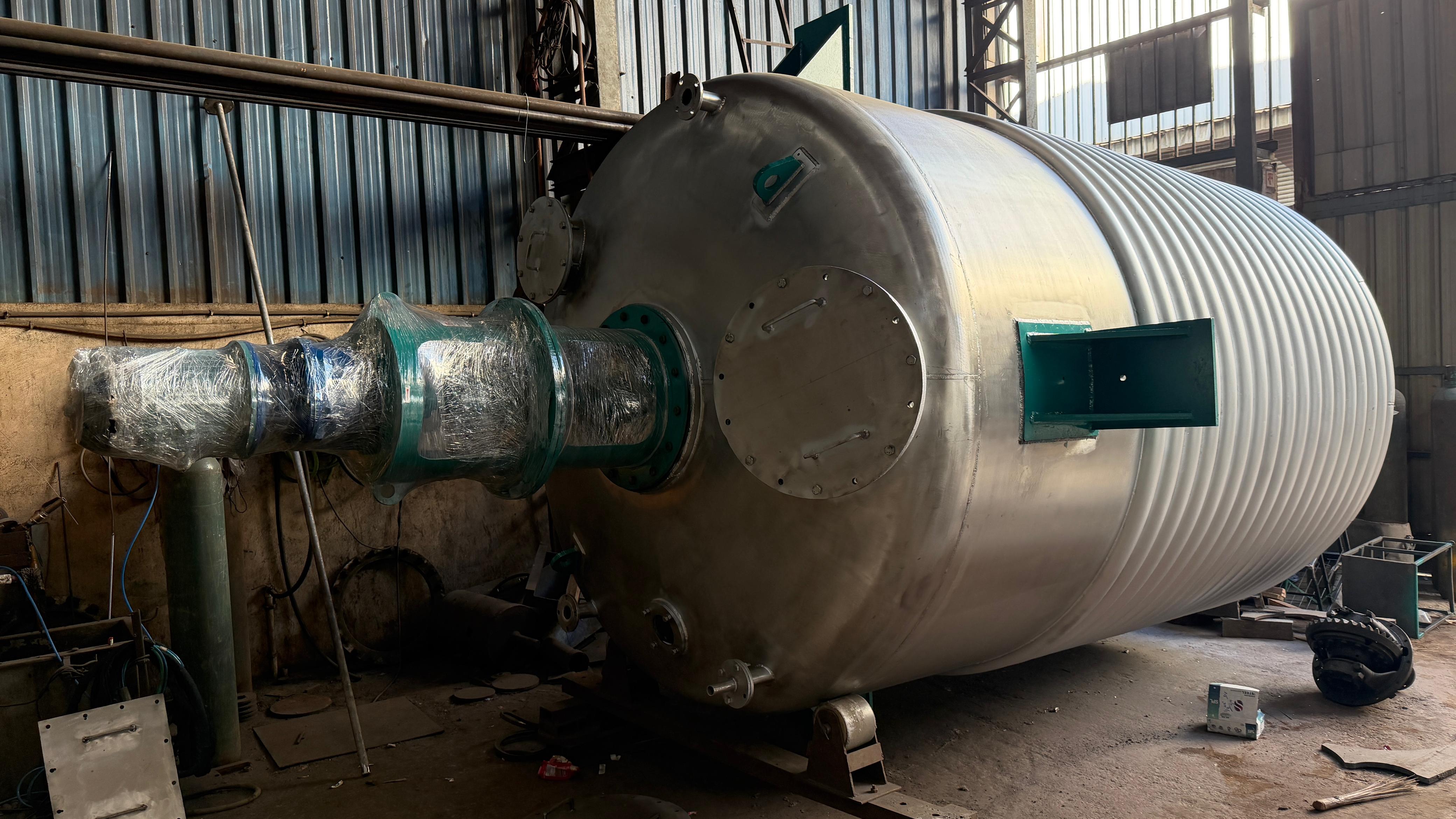
A horizontal tank is a cylinder lying on its side, supported on saddles. Its ends are usually dished or flat, and nozzles are mounted on the top and ends.
Key features
- Low profile, with valves, gauges, and nozzles within easy reach
- Handles internal pressure well thanks to curved shell and ends
- Easy to transport, since it travels as a single shop-built piece
- Suitable for underground and skid-mounted installations
- Needs more floor area per liter stored
Vertical vs Horizontal Tank: Factor-by-Factor Comparison
Factor | Vertical Tank | Horizontal Tank |
Floor area needed | Small | Large |
Capacity range | Small to very large | Small to medium |
Height | Tall; may need ladder or platform | Low; easy access |
Supports | Flat base, legs or skirt | Two or more saddles |
Wind and seismic effect | Higher for tall, slender tanks | Lower, due to low centre of gravity |
Draining | Complete, with cone or dished bottom | Needs a slight slope; some residue possible |
Level to volume | Straight-line relationship | Non-linear; needs calibration chart |
Pressure duty | Mostly atmospheric or low pressure | Better suited to pressurised storage |
Agitator fitment | Natural top-mounted | Possible, but side-entry and less common |
Installation | Large tanks often built on site | Delivered ready-made |
Underground use | Rare | Common |
1. Space and Capacity
For the same volume, a vertical tank takes up far less ground area. In a crowded production hall or a compact plant in an industrial estate such as those around Pune and Nashik, that saving can decide the whole layout.
Vertical tanks also scale up easily because both height and diameter can grow. Horizontal tanks grow mainly in length, and road transport limits and saddle stresses cap their practical size.
The flip side is height. Low ceilings, nearby overhead lines, or wind exposure can make a tall tank impractical. In such cases, a horizontal design, or several smaller tanks, may be the better answer.
2. Foundations and Structural Load
A flat-bottom vertical tank spreads its weight over a slab or ring foundation, which must be level and stable. Tanks on legs or skirts need properly sized anchor bolts, because a tall, slim tank can be pushed over by strong wind or an earthquake.
A horizontal tank concentrates its weight at the saddles, so the shell is checked or reinforced at those points. One saddle is fixed, and the other allows the shell to slide slightly as temperature changes. Because the tank sits low, wind and seismic loads are usually less of a concern.
3. Draining, Cleaning and Level Measurement
This is where process needs often settle the argument.
- Draining: A vertical tank with a conical or dished bottom empties through one outlet. This matters for batch plants, frequent product changes, and liquids that settle or crystallize.
- Cleaning: Spray balls fitted in the roof can wash the entire inner surface of a vertical tank, which suits hygienic and clean-in-place routines.
- Level reading: In a vertical tank, volume rises evenly with level. In a horizontal tank, the relationship is curved, so you need a strapping chart to convert level to volume accurately.
If you batch ingredients by level or change products often, vertical is usually the easier choice.
4. Pressure, Vapor and Safety
Flat-bottom vertical tanks are built for atmospheric or very low pressure. If your liquid has a high vapor pressure or needs a pressurized nitrogen blanket, a horizontal tank (or a vertical vessel built as a proper pressure vessel) is the safer route.
Fire and safety rules can also differ by orientation and by liquid type. For flammable liquids, buried horizontal tanks can reduce fire exposure, provided you design in corrosion protection and leak detection. Always check local regulations and your safety officer's requirements before finalizing.
Why Agitator Tanks Are Usually Vertical
When a liquid must be blended, dissolved, kept in suspension, or heated while it is stirred, the tank becomes a process machine rather than a simple container. A vertical Agitator Tank suits this role for several reasons:
- Central drive position: The motor and gearbox sit on top, and the shaft drops into the middle of the liquid.
- Even flow pattern: A round, upright tank with a well-placed impeller creates consistent circulation with fewer dead zones.
- Baffles and jackets: Baffles, heating or cooling jackets, and limpet coils fit naturally on a vertical shell.
- Full discharge: A dished or conical bottom lets you empty the batch, which reduces waste and cross-contamination.
- Easy sampling and charging: Roof and shell nozzles allow safe addition of powders and liquids.
Horizontal tanks can be fitted with side-entry agitators for special cases, such as keeping a stored liquid from settling, but vertical is the norm for true mixing duty.
Top 5 Industrial Agitator Types Used Across India
Choosing the tank is only half the job. The agitator must match the liquid. These are the five types most often specified in Indian process plants:
- Anchor agitator: Sweeps close to the wall. Good for viscous products, pastes, and jacket heat transfer.
- Paddle agitator: Simple and gentle. Used for low-speed blending and light suspensions.
- Turbine agitator (Rushton or pitched blade): Strong shear and flow. Suited to dispersion, gas mixing, and fast blending.
- Propeller agitator: High flow at low viscosity. Common for large water-like batches and tank circulation.
- Helical ribbon agitator: Moves thick material up and down. Used for very viscous resins, adhesives, and creams.
The right impeller, speed, and power depend on viscosity, density, batch size, and the result you want, which is why a proper design review matters.
Material Choice for Each Design
Orientation and material are separate decisions, but they work together.
- Mild steel (MS): Economical for water, oils, and non-corrosive liquids, often with a protective lining or coating.
- Stainless steel 304: Suitable for food, drinking water, and mild chemicals.
- Stainless steel 316 / 316L: Preferred for chlorides, many acids, and pharmaceutical products.
- Other alloys and linings: Considered for highly aggressive chemicals.
Hygienic and corrosive duties usually point to stainless steel vertical tanks with polished internal surfaces.
Which Design Fits Which Industry?
- Chemical plants: Vertical agitator tanks for reaction feed, blending and dilution; horizontal tanks for solvent day storage.
- Pharmaceutical units: Vertical stainless steel tanks for purified water, solutions and process liquids.
- Food and beverage: Vertical jacketed tanks for syrups, oils, juices and sauces.
- Paints, resins and adhesives: Vertical tanks with strong agitators for viscous mixing.
- Fuel and utilities: Horizontal or underground tanks for diesel and similar fuels.
- Water and effluent: Large vertical tanks for storage and treatment dosing.
Quick Decision Checklist
Ask yourself these questions before you finalize:
- How much floor area and ceiling height do I really have?
- Does the liquid need mixing, heating, or cooling inside the tank?
- Is the liquid stored at atmospheric pressure or under pressure?
- Do I need complete drainage between batches?
- How accurately must I measure the stored volume?
- Will the tank go indoors, outdoors, on a skid, or underground?
- Is the liquid corrosive, hygienic, or flammable?
If most answers point toward mixing, compact space, and clean drainage, go vertical. If they point toward pressure, low headroom, or burial, go horizontal.
What to Look for in an Agitator Tank Manufacturer
Many top agitator tank manufacturers in India, so compare them on more than price. Look for a supplier who can offer:
- Process-led design: Someone who asks about your liquid, viscosity, batch size, and cleaning method before quoting.
- Material traceability and welding quality: Proper test certificates and qualified welders.
- Complete package: Tank, agitator, gearbox, seal, jacket, baffles and nozzles from a single source.
- Customization: Dimensions and fittings made to your layout, not forced into a standard size.
- Testing and documentation: Hydrotest, dimensional checks, drawings and inspection reports.
- After-sales support: Spares, service and quick answers when you need them.
Technical Specifications – Agitator Tank
Our Agitator Tanks are manufactured with premium-grade materials to ensure durability and efficient performance.
Parameter | Specification |
Capacity | 100 Liters to 20,000 Liters |
Material of Construction | SS304, SS316, MS |
Tank Type | Vertical / Horizontal |
Agitator Type | Anchor, Paddle, Propeller, Turbine |
Motor Power | 0.5 HP to 30 HP |
Operating Speed | 20–150 RPM |
Gearbox | Helical / Worm Reduction Gearbox |
Tank Thickness | 3 mm to 12 mm |
Bottom Type | Flat, Conical, Dish End |
Outlet Size | 1" to 4" NB |
Surface Finish | Matt / Mirror Finish |
Power Supply | 415V, 3 Phase, 50Hz |
These specifications ensure smooth operation, excellent mixing efficiency, and dependable performance across various industrial processes.
Premium Components for Reliable Performance
Every Agitator Tank is built using precision-engineered components for long-lasting operation.
Main Components
- SS304 / SS316 Tank
- Agitator Shaft
- Impeller or Mixing Blade
- Electric Motor
- Gearbox
- Top Cover
- Outlet Valve
- Support Legs
- Control Panel
We select each part to maximize efficiency and reduce maintenance needs.
Vessel Tanks for Safe Industrial Storage & Processing
Along with Agitator Tanks, Orevia Engineering also manufactures high-quality Vessel Tanks for storage, processing, heating, cooling, and pressure applications.
Technical Specifications – Vessel Tank
Parameter | Specification |
Capacity | 100 Liters to 100,000 Liters |
Material | SS304, SS316, MS |
Orientation | Vertical / Horizontal |
Thickness | 3 mm to 16 mm |
Top Dish End | Torispherical / Flat |
Bottom Type | Flat / Conical / Dish End |
Operating Pressure | Atmospheric or Pressurized |
Working Temperature | Ambient to 200°C |
Outlet Size | 1" to 6" NB |
Utility Hole | 300 mm to 600 mm |
Optional Features | Jacket, Insulation, Level Indicator, Sampling Valve |
We manufacture a wide range of vessel tanks, including Storage Vessel Tanks, Chemical Vessel Tanks, Mixing Vessels, Reactor Vessels, Jacketed Vessels, Pressure Vessels, Vacuum Vessels, Process Vessels, and Insulated Storage Tanks.
How Orevia Engineering Pvt. Ltd. Can Help
Orevia Engineering Pvt. Ltd. is a Chemical Mixing Tank Manufacturer from Pune, supplying Industrial Agitator Tank solutions to customers across Maharashtra, including Nashik, and to other parts of India. We are also an Agitator Storage Tank Manufacturer from Maharashtra and support export inquiries as a Mixing Tank with Agitator Exporter from Pune.
How we work with you:
- Understand your process: We review the liquid, batch size, temperature, pressure, and cleaning needs.
- Recommend the right layout: Vertical, horizontal, or a combination, with the agitator type that suits your product.
- Engineer and fabricate: Tanks in mild steel, SS304 or SS316, with jackets, coils, baffles, insulation and nozzles as required.
- Test and deliver: Inspection and testing before dispatch, with documentation for your records.
- Support after installation: Guidance on commissioning, spares, and maintenance.
Whether you are looking for an Agitator Mixing Tank Manufacturer from Nashik side support, an Agitator Vessel Dealer in Pune, or an Agitator Dealer in India who can also manufacture to your specification, our team can guide you from the first sketch to the final delivery.
Ready to choose the right tank? Share your liquid, capacity, and site details with us and receive a tailored recommendation and quotation.
 |  |
Contact Orevia Engineering Pvt. Ltd.
Call Us: 9624986917 | 9624832424
Email: info@oreviaengineering.com
Website: https://www.oreviaengineering.com/
Get a Quote | Call Now | Send Your Requirement
Frequently Asked Questions (FAQs)
1. Is a vertical or horizontal tank better for mixing with an agitator?
A vertical tank is usually the better choice for mixing. The agitator drive sits on the roof, the shaft runs through the center, and the liquid circulates evenly. A dished or conical bottom also allows complete emptying after each batch. Horizontal tanks can take side-entry agitators, but these are mainly used to prevent settling during storage rather than for full blending.
2. Which tank needs less floor space for the same capacity?
A vertical tank needs much less floor area because it stores volume by using height. This makes it the preferred option in compact plants and production halls. Check ceiling height, wind exposure, and access requirements before finalizing a tall tank.
3. What materials can an agitator tank be made from?
Common choices are mild steel (with coating or lining), stainless steel 304, and stainless steel 316 or 316L. Mild steel suits water, oils, and non-corrosive liquids. SS304 suits food and mild chemicals. SS316 or 316L suits acids, chlorides, and pharmaceutical products. The best material depends on your liquid, temperature, and hygiene needs.
4. Can you customize an agitator tank for my process?
Yes. A good manufacturer designs the tank around your process. Orevia Engineering can customize capacity, dimensions, bottom shape, agitator type and speed, jackets or limpet coils, baffles, nozzles, insulation, and surface finish to match your batch size and product.
5. How do I choose the right agitator tank manufacturer in India?
Compare suppliers on design capability, welding and material quality, testing and documentation, customization, delivery time, and after-sales support. Ask for drawings, material certificates, and references from similar industries. A manufacturer that asks detailed questions about your process before quoting is usually a good sign.
Conclusion
No single winner exists in the vertical versus horizontal debate. Vertical tanks win on space, capacity, drainage, and mixing. Horizontal tanks win on low height, pressure handling, and underground or skid-mounted use. The best choice comes from weighing your liquid, layout, and process together.
If your goal is blending, dissolving, or controlled processing, a well-designed vertical agitator tank is almost always the right starting point. Talk to Orevia Engineering Pvt. Ltd., your trusted Mixing Tank With Agitator Manufacturer from Pune, and get a tank engineered for your plant.